Welcome (Céad Míle Fáilte!) to Small-leaved Shamrock

Showing posts with label Ireland. Show all posts

Wednesday, March 11, 2015

"The long and stormy passage": The 1823 sea voyage of Patrick Cowhey and a spirited Irish priest

"In early nineteenth-century Ireland, the Reverend Jeremiah O'Callaghan refused the sacraments to a dying man until he recanted his alleged usury, an incident that eventually got the priest banished to the wilds of northern Vermont," writes Charles R. Geisst in his book Beggar Thy Neighbor: A History of Usury and Debt.

Fr. O'Callaghan was a strong-willed priest on a mission. His determination to rid society of the sin of usury (monetary loans that he thought the church should consider unethical) led him to leave Ireland where he took up his cause first in New York, then in Rome. The end of his efforts, which were not taken seriously, resulted in him being sent to act as first pastor to a remote group of Catholics in Vermont.

My interest in Fr. O'Callaghan began not because of his campaign against the errors of capitalism, but because of the description he wrote of his first voyage to New York. It turns out that the priest made the same journey on the same ship in 1823 as my great-great-great-grandfather Patrick Cowhey, and the difficulty of the voyage led him to write about it. Fr. O'Callaghan makes mention of the experience within his 1824 book explaining the reasons behind what became his life's campaign Usury or Interest Proved to be Repugnant to the Divine and Ecclesiastical Laws and Destructive to Civil Society.

The 1835 printed edition of Fr. O'Callaghan's book
Here is the priest's description of the voyage:
"In expectation that America, the garden of liberty, would grant what had been denied me in Ireland, that is, power to pursue my clerical office, I sailed from Cork by the ship William, on the 6th of March, 1823, [some texts indicate the 8th of March] and after a boisterous passage, made New-York the 23d April. Visiting my old friend, Rev. John Power, of Skibbereen, Ireland, who for some years dignified the pulpit of this city. Several days elapsed in recounting our mutual adventures, putting and solving spiritual questions, and grieving for the distress and gloomy prospects of mother Erin. As soon as my constitution, that had been broken down by the long and stormy passage, was retrieved at his hospitable table, he presented me to Dr. Connelly, bishop of that city..."
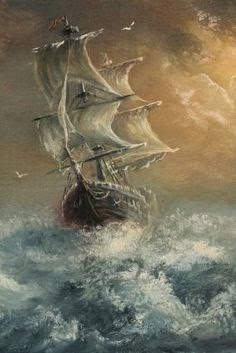
A famine ship during a storm
It was a great surprise to find this description of my ancestor's voyage to New York, particularly since I have not even been able to locate a picture of the Ship William. After discovering Fr. O'Callaghan's words about his negative experience on the ship, I took another look at the passenger list. There was the familiar document that I had viewed many times, with its arrival in New York from Cork, Ireland on April 26, 1823. But now I saw something I had not noticed before. Listed in the second row, several names above 15-year-old Patrick Cowhey, was another name now newly-familiar to me: "Rev. Jer. O'Callaghan".

Passengers on the Ship William arriving in New York, April 23, 1823

Patrick Cowhey
Abt. 1807-1871
Life at a Glance
  • Name at birth: Patrick Cowhey (possibly O'Cobhthaigh)
  • Parents: Unknown
  • Born: About 1807 in Ireland
  • Siblings: Unknown
  • Immigrated: Departed Cork aboard the Ship William between 6 and 8 March 1823; arrived in Port of New York on 23 April 1823
  • Married: To Ann (unknown maiden name) about 1831, probably in New York City
  • Children: John (1832-1836), William (1834-1892), Ann (1837-1864), Ellen (1840-1898), Thomas (1842-1899), Elisabeth (1844-1845), Johanah (1844-1846), John (1846-1920), Michael (1846-1855)
  • Duration of Marriage: About 40 years ending at Patrick's death on 7 March 1871
  • Died: 7 March 1871 in Pottsville, Schuylkill, PA about age 64
  • Buried: probably at St. Patrick's Cemetery, Pottsville, Schuylkill, PA


This article is included as part of the 52 Ancestors in 52 Weeks Challenge organized by Amy Johnson Crow. The theme for Week 10, in which this article falls, is "Stormy Weather". Most of this article was previously published here at Small-leaved Shamrock. [Note: Hat tip to Donna Pointkouski of What's Past is Prologue for the summary format I've used at the end of this article.] Find more stories of my ancestors' journeys on my Voyages of My Ancestors Pinterest board.

Monday, March 17, 2014

A St. Patrick’s Day miracle for the Irish/Hungarian genealogy blogger

You may be thinking, “It’s a miracle! Finally a new blog article from Lisa!”

Though this very well might be a small miracle, there is a real miracle I’d like to share with you in honor of St. Patrick’s Day. It is a documented phenomenon that occurred over three centuries ago that is still remembered and celebrated today. It is close to my heart for a very special reason, as you’ll see when you read on.

I first posted this article three years ago, but really wanted to share it again this year. Happy St. Patrick’s Day from Smallest Leaf!


As a Catholic and a mother, I often look to Christ’s mother, Mary, for inspiration. She is the perfect example of womanhood. Her life has provided encouragement to women for many generations, including my own and my beloved ancestors’ (on both the Irish and Hungarian/Croatian sides of the family).

In many places throughout the world, Mary is remembered by a special name or title, or honored with a particular statue or painting containing her image. There are countless “names” for Mary. I thought I had heard of most of them.

I was surprised to come across a new title for Mary recently that I absolutely could not believe. As the descendant of Irish and Hungarian ancestors, I was thrilled to discover the Irish Madonna of Hungary. The story behind this title of Mary involves a beautiful painting, two European cities a continent apart, and a documented miracle that is as surprising as it is inspiring.


The village of Clonfert in County Galway, Ireland could not hide from the troubles facing the island during the middle of the 17th century. Oliver Cromwell was imposing his will on the Irish people – often brutally – and many, particularly church leaders, were displaced, persecuted, or killed. Among those was one Irish bishop by the name of Walter Lynch. As history tells us, Bishop Lynch was forced to flee his native Clonfert to Galway city. After the attack and capture of Galway, he was pursued to the island of Inisbofin, and then escaped to mainland Europe. He was in Austria by 1655 – four years after fleeing Clonfert. While in Austria, the good Bishop met the Bishop of Győr, Hungary, who offered him the opportunity to continue his ministry within the Győr diocese until the time when Bishop Lynch could safely return to his homeland.

Sadly, Bishop Lynch, who was making plans to return to Ireland, passed away in Győr in the year 1663, twelve years after leaving Clonfert. During his travels as an exile, the Bishop had carried with him a painting of Mary and the child Jesus (shown below), which he had saved from the Clonfert cathedral. Before his passing, Bishop Lynch had placed the picture in the care of the Bishop of Győr, who put it on display in the Győr cathedral.

Thirty-four years passed with the painting housed in the Győr cathedral. The Hungarian faithful venerated this beautiful image of the Madonna, and felt sure that Mary’s intercession on their behalf had ensured their recent victories over the Turks. By the year 1697, Hungary was enjoying newfound peace. Unfortunately, that same year, Ireland was beginning to face one of its greatest trials: the outlawing of the Catholic faith, the confiscation of its churches, and the banishment of all Catholic clergy from the British Isles.

As historical accounts tell us, on the feast of St. Patrick on March 17, 1697 a miracle occurred in Győr. According to the account of a priest who witnessed the event, “…the picture of the Blessed Virgin in the cathedral began to weep copiously.” Additional details recorded indicate that this “weeping”, or “bloody sweat”, went on for several hours, and that witnesses of various denominations were unable to attribute the occurrence to any natural cause. Eventually, word of the miracle spread throughout the city. It was witnessed by thousands, many of whom signed a document indicating their presence at the time of the miracle. These included the imperial governor of the city, mayor, councilmen, the Bishop, priests, Protestant ministers, a Jewish rabbi and many more. A linen cloth used to soak up the liquid is still on display today in the cathedral. The inscription on the case reads: “This is the true cloth which was used to dry the blood, which this picture shed in this church on St. Patrick’s Day 1697.”

The linen cloth on display in Győr Basilica today
(Image thanks to Győri Egyházmegye - Győr Diocese)

The beautiful image of the Irish Madonna of Hungary, also referred to as the Consolatrix Afflictorum (Consoler of the Afflicted), remains in the cathedral to this day, framed in silver above the altar. For over three centuries, it has played a special role in drawing together the two nations of Hungary and Ireland.


Every March 17 since 1947 (the 250 year anniversary of the miracle), even during the Communist regime, Hungarian priests have made a pilgrimage to the Győr cathedral and visited the Győri Könnyező Szűzanya (Győr Weeping Virgin Mary) or Ír Madonna (Irish Madonna), as they call the painting in the Hungarian language.

Hungarian priests in procession at Győr Basilica
(Image thanks to Győri Egyházmegye - Győr Diocese)

Other special celebrations occur regularly for Hungarian lay Catholics to honor Mary’s weeping image in Győr, and there is even an annual Croatian-speaking celebration. Irish Catholics, too, regularly make pilgrimages to the Irish Madonna of Hungary. The year 1997 (the 300-year anniversary of the miracle) saw a special exchange as the Irish Clonfert Bishop John Kirby was presented a copy of the painting by Győr Bishop Lajos Papai on his visit to the city.

Győr, Hungary's Bishop Lajos Papai giving a copy of the
painting to Clonfert, Ireland's Bishop John Kirby
(Image thanks to Hitvallás)
As Clonfert’s Bishop John Kirby wrote, “The kindness shown to Bishop Walter Lynch has led to an unusual link between the small Irish rural diocese of Clonfert and the large Hungarian diocese of Győr centered in a big industrial city. It has shown us the value of friendship and the way that the consideration shown to a refugee can deepen the understanding between peoples who might otherwise never have known each other. The history of the painting has an even deeper message. It reminds us of the faith and trust in the intercession of Our Lady that existed both in Ireland and in Hungary 350 years ago.”

The Basilica of Győr today
Where were my Irish and Hungarian ancestors 350 years ago? I haven’t determined that yet, but it is interesting to imagine the possibilities knowing the history of the time.

As you may know, Catholics like to choose patron saints for themselves. I think it’s pretty obvious that Mary, the Irish Madonna of Hungary, is the ideal patron saint for this Irish/Hungarian genealogist! I hope that Győr’s Weeping Virgin Mary, the Consoler of the Afflicted, will smile down on my efforts to continue the search for ancestors on both sides of my family tree: those from Bishop Lynch’s beloved native Ireland, and those from Hungary, the country that welcomed him with open arms.


If you'd like to read more about the history of the Irish Madonna of Hungary, check out the following websites and books:
Note: This article is cross-posted to my Hungarian genealogy blog, 100 Years in America.  Happy St. Patrick's Day to all!

Sunday, December 22, 2013

"Don't blow the tall white candle out...": A song for Christmas Eve

Christmas Eve is a magical time. The waiting of Advent is over and the celebration of the Savior's birth is about to begin.

Photo by Malene Thyssen
One beautiful way that the Irish have traditionally kept this holy night is with the lighting of a candle in the window. The warm light from its glow acts as a welcome to all so that no one should be without shelter.

Offering hospitality to others by way of a lighted candle is a tradition as old as ancient Ireland. In more recent centuries during times of persecution in Ireland, the candle offered a welcome to priests that the home was a safe haven and that Mass could be offered there. On Christmas Eve, the candle also symbolizes the willingness of the household to welcome the Holy Family, so that the Infant Jesus and his family would not again be turned away. One Irish belief held that Joseph, Mary and Jesus still wandered the world, seeking a place of refuge from Herod.

The words of The Kerry Christmas Carol, written by Sigerson Clifford, admonish us to be sure to provide a welcome for the Holy Family on this special night before Christmas. Below are verses two and seven. I've placed the full version of the song here.


Verse 2

Ná múch an coinneal ard bán,
Ach fág é lásta go geal.
Go mbeidh siad cinnte ar aon
go bhfuil fáilte is fiche roimh cách
Sa teach ar an Oiche Nollag naofa seo!

Don't blow the tall white candle out
But leave it burning bright,
So that they'll know they're welcome here
This holy Christmas night!

Verse 7

Ná cur ar an ndoras ach an laiste anocht!
Agus coimead na gríosaigh beó -
Agus guí go mbeidh siad fén ar ndíon anocht
Agus an domhan 'na chodladh go suan.

Leave the door upon the latch,
And set the fire to keep,
And pray they'll rest with us tonight
When all the world's asleep.


Tim Dennehy, who has recorded The Kerry Christmas Carol, has also written a song of his own to be sung in welcome of the Holy Family on Christmas Eve.

Tim has taken a traditional Irish prayer of welcome and added additional verses and a refrain. His song, An Nollaig Theas, begins as follows:


Dia do bheatha 'dir asal is damh gan riar
Dia do bheatha id' leanbh, id Fhlaith gan chiach
Dia do bheatha ód' Fhlaithis go teach na bpian
Dia do bheathasa 'Íosa.

Dún do shúil a Rí an tSolais, dún do shúile ríoga
Dún do shúil a Shaoi an tSonais, dún do shúile síoda.


Translated to English, the words are:


God's greeting to you untended 'tween ox and ass
God's greeting to you Child and Prince serene
God's greeting to you from heaven to the hour of pain
God's greeting to you dear Jesus.

Close your eyes oh King of light, close your regal eyes
Close your eyes oh fount of happiness, close your silken eyes.


You can find the rest of the lyrics to the song on Tim Dennehy's website.

If you choose to light a candle in your window this Christmas Eve and would like to follow Irish tradition, remember that it requires that the candle be left burning throughout the night. Oh, and it must only be blown out by one having the name of Mary! Or was that the youngest child in the family? Actually it might have been the youngest child who would, of course, be named Mary.

No matter. As long as you get the candle in the window I think any Irishman or woman would be feel welcomed at your home on Christmas Eve, not to mention Mary, Joseph and the Infant Jesus.


This article previously appeared here at Small-leaved Shamrock as part of Thomas MacEntee's GeneaBloggers Advent Calendar of Christmas Memories 2008 and 2009. I've republished it this year in celebration of footnoteMaven's Blog Caroling event. Merry Christmas to all!

Image thanks to DoChara.com.

Tuesday, March 5, 2013

"The long and stormy passage": The 1823 sea voyage of Patrick Cowhey and a spirited Irish priest

"In early nineteenth-century Ireland, the Reverend Jeremiah O'Callaghan refused the sacraments to a dying man until he recanted his alleged usury, an incident that eventually got the priest banished to the wilds of northern Vermont," writes Charles R. Geisst in his newly-published book Beggar Thy Neighbor: A History of Usury and Debt.

Fr. O'Callaghan was a strong-willed priest on a mission. His determination to rid society of the sin of usury (monetary loans that he thought the church should consider unethical) led him to leave Ireland where he took up his cause first in New York, then in Rome. The end of his efforts, which were not taken seriously, resulted in him being sent to act as first pastor to a remote group of Catholics in Vermont.

My interest in Fr. O'Callaghan began not because of his campaign against the errors of capitalism, but because of the description he wrote of his first voyage to New York. It turns out that the priest made the same journey on the same ship in 1823 as my great-great-great-grandfather Patrick Cowhey, and the difficulty of the voyage led him to write about it. Fr. O'Callaghan makes mention of the experience within his 1824 book explaining the reasons behind what became his life's campaign (which was reprinted other times and under additional titles): Usury or Interest Proved to be Repugnant to the Divine and Ecclesiastical Laws and Destructive to Civil Society.
The 1835 printed edition of Fr. O'Callaghan's book
Here is the priest's description of the voyage:
"In expectation that America, the garden of liberty, would grant what had been denied me in Ireland, that is, power to pursue my clerical office, I sailed from Cork by the ship William, on the 6th of March, 1823, [some texts indicate the 8th of March] and after a boisterous passage, made New-York the 23d April. Visiting my old friend, Rev. John Power, of Skibbereen, Ireland, who for some years dignified the pulpit of this city. Several days elapsed in recounting our mutual adventures, putting and solving spiritual questions, and grieving for the distress and gloomy prospects of mother Erin. As soon as my constitution, that had been broken down by the long and stormy passage, was retrieved at his hospitable table, he presented me to Dr. Connelly, bishop of that city..."
A famine ship during a storm
It was a great surprise to find this description of my ancestor's voyage to New York, particularly since I have not even been able to locate a picture of the Ship William.  After discovering Fr. O'Callaghan's words about his negative experience on the ship, I took another look at the passenger list. There was the familiar document that I had viewed many times, with its arrival in New York from Cork, Ireland on April 26, 1823. But now I saw something I had not noticed before. Listed several names above 15-year-old Patrick Cowhey was another name, now newly-familiar to me: "Rev. Jer. O'Callaghan".

Passengers on the Ship William arriving in New York, April 23, 1823
(Click on image to enlarge)

This article was written in celebration of the anniversary of this voyage that brought my Cowhey ancestors to America. Tomorrow, March 6, 2013, is the 190th anniversary of Patrick Cowhey's and Rev. Jeremiah O'Callaghan's departure from Cork, Ireland on the Ship William. Find more stories on my Voyages of My Ancestors Pinterest board

I have also posted this article as part of GeneaBloggers' weekly blogging prompt Travel Tuesday. Visit Thomas MacEntee's GeneaBloggers blog and also see his Travel Tuesday board on Pinterest for more family history journeys.

Friday, March 18, 2011

Celebrate Irish roots with GeneaBloggers Radio

The celebration of Irish heritage continues this St. Patrick's week as Thomas MacEntee's GeneaBloggers Radio presents Irish Roots – A St. Patrick’s Day Celebration! tonight from 10:00 - 12:00 p.m. Eastern.


Listen to internet radio with Geneabloggers on Blog Talk Radio
Special guest Brian Mitchell, author of a number of Irish genealogy reference books such as A New Genealogical Atlas of Ireland, 2nd Edition will open the show.  He will be followed by myself and several other genealogists and family historians with a focus on Irish genealogy: Sharon Sergeant, Mary Ellen Grogan, Jennifer Geraghty Gorman and Deborah Large Fox.

I hope you'll take time to listen - and call in - to the show as we delve into various topics related to Irish research and heritage!

Thursday, March 17, 2011

A St. Patrick’s Day miracle for the Irish/Hungarian genealogy blogger

You may be thinking, “It’s a miracle! Finally a new blog article from Lisa!”

Though this very well might be a small miracle, there is a real miracle I’d like to share with you in honor of St. Patrick’s Day. It is a documented phenomenon that occurred over three centuries ago that is still remembered and celebrated today. It is close to my heart for a very special reason, as you’ll see when you read on.

Happy St. Patrick’s Day from Smallest Leaf!


As a Catholic and a mother, I often look to Christ’s mother, Mary, for inspiration. She is the perfect example of womanhood. Her life has provided encouragement to women for many generations, including my own and my beloved ancestors’ (on both the Irish and Hungarian/Croatian sides of the family).

In many places throughout the world, Mary is remembered by a special name or title, or honored with a particular statue or painting containing her image. There are countless “names” for Mary. I thought I had heard of most of them.

I was surprised to come across a new title for Mary recently that I absolutely could not believe. As the descendant of Irish and Hungarian ancestors, I was thrilled to discover the Irish Madonna of Hungary. The story behind this title of Mary involves a beautiful painting, two European cities a continent apart, and a documented miracle that is as surprising as it is inspiring.


The village of Clonfert in County Galway, Ireland could not hide from the troubles facing the island during the middle of the 17th century. Oliver Cromwell was imposing his will on the Irish people – often brutally – and many, particularly church leaders, were displaced, persecuted, or killed. Among those was one Irish bishop by the name of Walter Lynch. As history tells us, Bishop Lynch was forced to flee his native Clonfert to Galway city. After the attack and capture of Galway, he was pursued to the island of Inisbofin, and then escaped to mainland Europe. He was in Austria by 1655 – four years after fleeing Clonfert. While in Austria, the good Bishop met the Bishop of Győr, Hungary, who offered him the opportunity to continue his ministry within the Győr diocese until the time when Bishop Lynch could safely return to his homeland.

Sadly, Bishop Lynch, who was making plans to return to Ireland, passed away in Győr in the year 1663, twelve years after leaving Clonfert. During his travels as an exile, the Bishop had carried with him a painting of Mary and the child Jesus (shown below), which he had saved from the Clonfert cathedral. Before his passing, Bishop Lynch had placed the picture in the care of the Bishop of Győr, who put it on display in the Győr cathedral.

Thirty-four years passed with the painting housed in the Győr cathedral. The Hungarian faithful venerated this beautiful image of the Madonna, and felt sure that Mary’s intercession on their behalf had ensured their recent victories over the Turks. By the year 1697, Hungary was enjoying newfound peace. Unfortunately, that same year, Ireland was beginning to face one of its greatest trials: the outlawing of the Catholic faith, the confiscation of its churches, and the banishment of all Catholic clergy from the British Isles.

As historical accounts tell us, on the feast of St. Patrick on March 17, 1697 a miracle occurred in Győr. According to the account of a priest who witnessed the event, “…the picture of the Blessed Virgin in the cathedral began to weep copiously.” Additional details recorded indicate that this “weeping”, or “bloody sweat”, went on for several hours, and that witnesses of various denominations were unable to attribute the occurrence to any natural cause. Eventually, word of the miracle spread throughout the city. It was witnessed by thousands, many of whom signed a document indicating their presence at the time of the miracle. These included the imperial governor of the city, mayor, councilmen, the Bishop, priests, Protestant ministers, a Jewish rabbi and many more. A linen cloth used to soak up the liquid is still on display today in the cathedral. The inscription on the case reads: “This is the true cloth which was used to dry the blood, which this picture shed in this church on St. Patrick’s Day 1697.”

The linen cloth on display in Győr Basilica today
(Image thanks to Győri Egyházmegye - Győr Diocese)

The beautiful image of the Irish Madonna of Hungary, also referred to as the Consolatrix Afflictorum (Consoler of the Afflicted), remains in the cathedral to this day, framed in silver above the altar. For over three centuries, it has played a special role in drawing together the two nations of Hungary and Ireland.


Every March 17 since 1947 (the 250 year anniversary of the miracle), even during the Communist regime, Hungarian priests have made a pilgrimage to the Győr cathedral and visited the Győri Könnyező Szűzanya (Győr Weeping Virgin Mary) or Ír Madonna (Irish Madonna), as they call the painting in the Hungarian language.

Hungarian priests in procession at Győr Basilica
(Image thanks to Győri Egyházmegye - Győr Diocese)

Other special celebrations occur regularly for Hungarian lay Catholics to honor Mary’s weeping image in Győr, and there is even an annual Croatian-speaking celebration. Irish Catholics, too, regularly make pilgrimages to the Irish Madonna of Hungary. The year 1997 (the 300-year anniversary of the miracle) saw a special exchange as the Irish Clonfert Bishop John Kirby was presented a copy of the painting by Győr Bishop Lajos Papai on his visit to the city.

Győr, Hungary's Bishop Lajos Papai giving a copy of the
painting to Clonfert, Ireland's Bishop John Kirby
(Image thanks to Hitvallás)
As Clonfert’s Bishop John Kirby wrote, “The kindness shown to Bishop Walter Lynch has led to an unusual link between the small Irish rural diocese of Clonfert and the large Hungarian diocese of Győr centered in a big industrial city. It has shown us the value of friendship and the way that the consideration shown to a refugee can deepen the understanding between peoples who might otherwise never have known each other. The history of the painting has an even deeper message. It reminds us of the faith and trust in the intercession of Our Lady that existed both in Ireland and in Hungary 350 years ago.”

The Basilica of Győr today
Where were my Irish and Hungarian ancestors 350 years ago? I haven’t determined that yet, but it is interesting to imagine the possibilities knowing the history of the time.

As you may know, Catholics like to choose patron saints for themselves. I think it’s pretty obvious that Mary, the Irish Madonna of Hungary, is the ideal patron saint for this Irish/Hungarian genealogist! I hope that Győr’s Weeping Virgin Mary, the Consoler of the Afflicted, will smile down on my efforts to continue the search for ancestors on both sides of my family tree: those from Bishop Lynch’s beloved native Ireland, and those from Hungary, the country that welcomed him with open arms.


If you'd like to read more about the history of the Irish Madonna of Hungary, check out the following websites and books:
Note: This article is cross-posted to my Hungarian genealogy blog, 100 Years in America.  Happy St. Patrick's Day to all!
Thursday, February 4, 2010

"I speak with a proud tongue...": A poem for our Irish ancestors

A great poem that helps to conjure up images of many of our Irish forebears...

Dedication
by Patrick MacGill (1890- )

I speak with a proud tongue of the people who were
And the people who are,
The worthy of Ardara, the Rosses and Inishkeel,
My kindred-
The people of the hills and the dark-haired passes
My neighbours on the lift of the brae,
In the lap of the valley.
To them Slainthé!

I speak of the old men,
The wrinkle-rutted,
Who dodder about foot-weary -
For their day is as the day that has been and is no more -
Who warm their feet by the fire,
And recall memories of the times that are gone;
Who kneel in the lamplight and pray
For the peace that has been theirs -
And who beat one dry-veined hand against another
Even in the sun-
For the coldness of death is on them.

I speak of the old women
Who danced to yesterday's fiddle
And dance no longer.
They sit in a quiet place and dream
And see visions
Of what is to come,
Of their issue,
Which has blossomed to manhood and womanhood -
And seeing thus
They are happy
For the day that was leaves no regrets,
And peace is theirs
And perfection.

I speak of the strong men
Who shoulder their burdens in the hot day,
Who stand on the market-place
And bargain in loud voices,
Showing their stock to the world.
Straight the glance of their eyes -
Broad-shouldered,
Supple.
Under their feet the holms blossom,
The harvest yields.
The their path is of prosperity.

I speak of the women,
Strong hipped, full-bosomed,
Who drive the cattle to graze at dawn,
Who milk the cows at dusk.
Grace in their homes,
And in the crowded ways
Modest and seemly -
Mother of children!

I speak of the children
Of the many townlands,
Blossoms of the Bogland,
Flowers of the Valley,
Who know not yesterday, nor to-morrow,
And are happy,
The pride of those who have begot them.

And thus it is,
Every and always,
In Ardara, the Rosses and Inishkeel -
Here, as elsewhere,
The Weak, the Strong, and the Blossoming -
And thus my kindred.

To them Slainthé!


(This poem can be found in 1000 Years of Irish Poetry: The Gaelic and Anglo Irish Poets from Pagan Times to the Present by Kathleen Hoagland)

Friday, January 15, 2010

Irish Blog Awards taking nominations for 2010

Time's almost up!  Irish Blog Awards 2010 nominations are currently being accepted but will close very soon.  Take some time to vote for your favorite Irish blogs and blog posts.  Winners will be announced in Galway in March.

Thursday, January 7, 2010

"Show and tell": Irish genealogical treasures

Genealogists are treasure hunters of a different kind. Instead of searching for riches, we dig for information. Instead of prizing gold, we value documents - the visual proof of the life stories of families that have passed before us.

This 17th edition of the Carnival of Irish Heritage & Culture is a chance for some of us to show off the treasures that we have accumulated during our search for family history.  Show and tell is always lots of fun, and this one is no exception.  Get ready to see some true Irish genealogical treasures and hear the stories behind them.  Happy reading!


A family Bible is a rare treasure appreciated by every family historian.  Frances Ellsworth (aka "Hummer") presents images of the family Bible that once belonged to her Magill ancestors.  Using the information in the Bible, she was able to confirm that the land patent records that she had found listed the correct Magill family. Visit Frances' 17th edition of the Carnival of Irish Heritage & Culture Irish Treasures posted at Branching Out Through The Years to see the Bible pages for yourself and read about the land records Frances found.

Unable to come across the information I was looking for in a family Bible, a state record repository, a county record repository, or church archive, I was thrilled to find it nestled within the pages of my great-great-grandfather's Civil War pension file.  View the church document (complete with the parish seal) that I found within that file that listed the birth and baptism dates of many of the Cowhey family members for whom I was searching at my article Family treasure at the National Archives: 19th-century birth records & more here at Small-leaved Shamrock.

Sometimes the rumor of Irish ancestry runs through a family, although the actual proof is hard to find.  Debra Osborne Spindle (aka "Tex") finds that to be the case in her family.  As she states in Irish Roots at Last. Probably., this author of All My Ancestors "joined the Carnival of  Irish Heritage & Culture on faith", since she has not yet been able to find a primary source document confirming her Mitchell clan's Irish ancestry.  She has, however, found a book that includes a mention that her ancestor "emigrated from Ireland in 1752".  Visit Debra's blog to read more about the story of her Mitchell ancestors and her quest to confirm her possible Irish roots.

Thomas MacEntee of Destination Austin Family has the type of family document in his possession that Debra is looking for.  Visit An Irish Treasure: Citizenship Papers for Matthew McGinnes to see a copy of "one of [Thomas'] most cherished treasures": his great-great-grandfather's original United States citizenship certificate dated 1888.

I have a similar document in my possession (although it is not the original): the naturalization papers of my great-great-grandfather dated 1876.  Visit Tierney family treasure: Patrick's naturalization papers, 1876 to see the documents, read their transcriptions, and learn which "item" within these documents that I like the best.

For this "show and tell" carnival Julie Cahill Tarr of GenBlog shares with us an obituary of her great-great-grandmother Margaret "Maggie" Millet Cahill.  It states an important piece of information: Maggie's birthplace in County Kilkenny, Ireland. Visit Julie's Irish Genealogy Treasures to read the obituary for yourself.

K. Wech started off her new blog with an entry for our carnival.  At Central PA Genealogist she presents the story of her First genealogical trip to Ireland which resulted from the discovery she made in an obituary of an ancestor who died in 1900.  Visit her blog to hear the story of the kindnesses she experienced in the people of County Longford, Ireland during a visit there in search of her roots.

Dorene Paul, the Graveyard Rabbit of Sandusky Bay, shares with us the Marriage Record of Thomas F. Larkins and Lula M. Cross, her great-great-grandparents.  After an unsuccessful search at the Erie County, Ohio courthouse, she states, "I came across the marriage record for my great-great-grandparents, Thomas F. and Mary Louise Cross Larkins, in Kalamazoo County, Michigan during a Google Search."  A happy surprise for Dorene in her search for family history!

Dr. Bill (William L.) Smith wasn't sure he had any Irish ancestry until the discovery of the birthplace of his great-great-great-grandfather way back in 1745 in County Wicklow, Ireland.  Visit Dr. Bill Tells Ancestor Stories for more of the fascinating story of John Butler - [Bill's] Irish Ancestor who followed his brother from Ireland to America and fought in the Revolutionary War.

Moving ahead to the middle of the 20th-century, Bill West of West in New England shares the 1949 land deed for the transfer of a Boston home from one family member of The McFarlands of Parker Street, Boston, MA to another. Like my Boston Tierney family and many other extended families of the time, the McFarlands settled together on one street, sometimes renting, sometimes buying, sometimes moving down the street, but often remaining close neighbors with other family members.

Karen Hammer of Ancestor Soup shares with us her most important "treasure" in terms of her Irish ancestry - and the reason that her family has retained pride in their Irish heritage.  Visit My Irish Genealogy Treasure to read her story.  Those of us that have an "Uncle Jimmy" in our own families certainly can relate.

Alice Keesey Mecoy has a special treat for us at this edition of the carnival.  She says, "I don't believe that I have any Irish blood flowing in my veins, but I can share my love and memories of the Irish Crochet my grandmother lovingly created for many, many years." Visit Genealogy Treasure Show and Tell in the Carnival of Irish Heritage & Culture posted at Alice's John Brown Kin.


Thanks to all of you who contributed to this "show and tell" fun and to those of you who took the time to read.  Please plan to join us for the upcoming 18th edition of the Carnival of Irish Heritage & Culture, also known as the:

3rd annual 
Small-leaved Shamrock 
St. Patrick's Day 
Parade of Posts 

The topic is anything and everything Irish, so come join in the fun whether or not you have Irish roots!  The deadline is Sunday, March 14, 2009.  The carnival will be published on St. Patrick's Day, March 17.  For more details, visit the Carnival of Irish Heritage & Culture blog.  See you there!

Thursday, December 24, 2009

A candle in the window on Christmas Eve (Advent Calendar: Christmas Eve)

Christmas Eve is a magical time. The waiting of Advent is over and the celebration of the Savior's birth is about to begin.

One beautiful way that the Irish have traditionally kept this holy night is with the lighting of a candle in the window. The warm light from its glow acts as a welcome to all so that no one should be without shelter.

Offering hospitality to others by way of a lighted candle is a tradition as old as ancient Ireland. In more recent centuries during times of persecution in Ireland, the candle offered a welcome to priests that the home was a safe haven and that Mass could be offered there. On Christmas Eve, the candle also symbolizes the willingness of the household to welcome the Holy Family, so that the Infant Jesus and his family would not again be turned away. One Irish belief held that Joseph, Mary and Jesus still wandered the world, seeking a place of refuge from Herod.

The words of The Kerry Carol, written by Sigerson Clifford, admonish us to be sure to provide a welcome for the Holy Family on this special night before Christmas. Below are verses two and seven. I've placed the full version of the song here.

Verse 2
Ná múch an coinneal ard bán,
Ach fág é lásta go geal.
Go mbeidh siad cinnte ar aon
go bhfuil fáilte is fiche roimh cách
Sa teach ar an Oiche Nollag naofa seo!


Don't blow the tall white candle out
But leave it burning bright,
So that they'll know they're welcome here
This holy Christmas night!


Verse 7
Ná cur ar an ndoras ach an laiste anocht!
Agus coimead na gríosaigh beó -
Agus guí go mbeidh siad fén ar ndíon anocht
Agus an domhan 'na chodladh go suan.

Leave the door upon the latch,
And set the fire to keep,
And pray they'll rest with us tonight
When all the world's asleep.


Tim Dennehy, who has recorded The Kerry Carol, has also written a song of his own to be sung in welcome of the Holy Family on Christmas Eve.

Tim has taken a traditional Irish prayer of welcome and added additional verses and a refrain. His song, An Nollaig Theas, begins as follows:

Dia do bheatha 'dir asal is damh gan riar
Dia do bheatha id' leanbh, id Fhlaith gan chiach
Dia do bheatha ód' Fhlaithis go teach na bpian
Dia do bheathasa 'Íosa.

Dún do shúil a Rí an tSolais, dún do shúile ríoga
Dún do shúil a Shaoi an tSonais, dún do shúile síoda.


Translated to English, the words are:

God's greeting to you untended 'tween ox and ass
God's greeting to you Child and Prince serene
God's greeting to you from heaven to the hour of pain
God's greeting to you dear Jesus.

Close your eyes oh King of light, close your regal eyes
Close your eyes oh fount of happiness, close your silken eyes.


You can find the rest of the lyrics to the song on Tim Dennehy's website Sceilig.com.

If you choose to light a candle in your window this Christmas Eve and would like to follow Irish tradition, remember that it requires that the candle be left burning throughout the night. Oh, and it must only be blown out by one having the name of Mary! Or was that the youngest child in the family? Actually it might have been the youngest child who would, of course, be named Mary.

No matter. As long as you get the candle in the window I think any Irishman or woman would be feel welcomed at your home on Christmas Eve, not to mention Mary, Joseph and the Infant Jesus.

Image courtesy of DoChara.com.

This article is part of a series written in celebration of the Advent and Christmas seasons. It will be included as part of the GeneaBloggers Advent Calendar of Christmas Memories 2009 Day 24: Christmas Eve. Make a visit to Thomas MacEntee's GeneaBloggers website for some additional inspiration to get yourself in the holiday spirit!

The article originally appeared here at Small-leaved Shamrock and was included in Thomas MacEntee's Advent Calendar of Christmas Memories 2007.

Monday, December 21, 2009

Can't forget Killarney... (Advent Calendar: Christmas Music)

Speaking of Christmas carols, I can't help but mention one of my favorites. It also evokes a traditional Irish Christmas like the songs I wrote about earlier, but it is certainly a more modern song.

The carol I'm referring to is Christmas in Killarney by John Redmond, James Cavanaugh and Frank Weldon. Bobby Vinton's version of the song conjures up memories for me of my childhood living room: me resting on the floor below the Christmas tree with Christmas in Killarney playing on the stereo system's record player. It might have been the very song that inspired me to learn how to use the record player and place the needle at just the right place so that I could repeat my favorite song, although I remember enjoying all the songs on Bobby Vinton's Christmas album.

Only now listening to it again do I realize all the references to Irish culture in the song: the holly leaves, the ivy green, the mistletoe, the jigs and reels...

Click here for Jim Corbett and Chris Caswell's version of the song, sung with a nice Irish brogue.

Here are the words (a more complete set of lyrics than the ones used in the audio version linked above):

Christmas In Killarney

Verse:
The holly green, the ivy green
The prettiest picture you've ever seen
Is Christmas in Killarney
With all of the folks at home
It's nice, you know, to kiss your beau
While cuddling under the mistletoe
And Santa Claus you know, of course
Is one of the boys from home

Bridge:
The door is always open
The neighbors pay a call
And Father John before he's gone
Will bless the house and all
Our Hearts are light, our spirits bright
We'll celebrate our joy tonight
Is Christmas in Killarney
With all of the folks at home

Repeat Verse

Bridge:
We'll decorate the Christmas tree
When all the family's here
Around a roaring fire
We will raise a cup of cheer
There's gifts to bring,
And songs to sing
And laughs to make the rafters ring
Is Christmas in Killarney
With all of the folks at home

Repeat Verse

Bridge:
We'll take the horse and sleigh all
Across the fields of snow
Listening to the jingle bells
Everywhere we go
How grand it feels to click your heels
And dance away to the jigs and reels
It's Christmas in Killarney
With all of the folks at home

Repeat Verse

Is Christmas in Killarney
With all of the folks at home

This article is part of a series written in celebration of the Advent and Christmas seasons. It will be included as part of the GeneaBloggers Advent Calendar of Christmas Memories 2009 Day 21: Christmas Music. Make a visit to Thomas MacEntee's GeneaBloggers website for some additional inspiration to get yourself in the holiday spirit!

The article originally appeared here at Small-leaved Shamrock and was included in Thomas MacEntee's Advent Calendar of Christmas Memories 2007. In the mood for more Christmas carols? Check out footnote Maven's "heavenly host" at A Choir of GeneaAngels. The angel to footnote Maven's right in the center of the choir is standing in for me.

Sing of Christmas! (Advent Calendar: Christmas Music)

The Irish have long been known for their love of music, their talent for writing poetry, and their devotion to faith. All of these come together beautifully in traditional Irish Christmas carols.

You may not be as familiar with The Wexford Carol and others as with some of the more frequently-played modern-day carols and other traditional favorites. But the richness of the words and the Irish charm of the music may call you to make these carols an important part of your family's Christmas celebration.

The Wexford Carol is one of the oldest Irish carols and may date back to the 12th century. You can find the audio version of the music here or here. These are the words:

The Wexford Carol

Good people all, this Christmas-time,
Consider well and bear in mind
What our good God for us has done
In sending his beloved Son.

With Mary holy we should pray
To God with love this Christmas day;
In Bethlehem upon that morn
There was a blessed Messiah born.

The night before that happy tide
The noble Virgin and her guide
Were long time seeking up and down
To find a lodging in the town.

But mark how all things came to pass;
From every door repelled alas!
As long foretold, their refuge all
Was but an humble ox's stall.

There were three wise men from afar
Directed by a glorious star,
And on they wandered night and day
Until they came where Jesus lay,

And when they came unto that place
Where our beloved Messiah was,
They humbly cast them at his feet,
With gifts of gold and incense sweet.

Near Bethlehem did shepherds keep
Their flocks of lambs and feeding sheep;
To whom God's angels did appear,
Which put the shepherds in great fear.

"Prepare and go", the angels said.
'To Bethlehem, be not afraid,
For there you'll find this happy morn,
A princely babe, sweet Jesus born.

With thankful heart and joyful mind,
The shepherds went the babe to find,
And as God's angel had foretold,
They did our savior Christ behold.

Within a manger he was laid,
And by his side the virgin maid,
Attending on the Lord of life,
Who came on earth to end all strife.

A newer but also well-loved Irish song, The Kerry Christmas Carol (An Ciarrí Carúl Nollag), was first published in 1955 in a book of poetry entitled Ballads of a Bogman. Written by Sigerson Clifford, it focuses on a traditional Irish Christmas Eve custom. Each household welcomes the Holy Family to their home by lighting a candle and placing it in a window. According to Jack & Vivian Hennessey's Irish Page about the Kerry carol, "There was a pious belief that Joseph and Mary and the Child still wandered the roads of the world, looking for a place to rest from the persecution of Herod. That they should show a preference for the roads of rural Ireland was accepted as a given."

The only online audio version of The Kerry Christmas Carol that I could find is this little snippet from Tim Dennehy's Between The Mountains And The Sea. Here are the words to the song in Irish-Gaelic followed by the English translation (thanks to the Irish Page):

An Ciarrí Carúl Nollag
The Kerry Christmas Carol

Verse 1
Scuab an t-urlár agus glan an teallach,
's coimead na grísaigh beo,
Ar eagla go dtiocfhaidh siad anocht,
Agus an domhan 'na chodladh go suan!

Brush the floor and clean the hearth,

And set the fire to keep,
For they might visit us tonight
When all the world's asleep!

Verse 2
Ná múch an coinneal ard bán,
Ach fág é lásta go geal.
Go mbeidh siad cinnte ar aon
go bhfuil fáilte is fiche roimh cách
Sa teach ar an Oiche Nollag naofa seo!

Don't blow the tall white candle out
But leave it burning bright,
So that they'll know they're welcome here
This holy Christmas night!

Verse 3
Léig amach ar an mbord, arán is feoil,
Agus braonín bainne don leanbh.
Agus beidh beannacht ar an dtine
Agus ar an té a bhruith an t-arán
Agus ar an lamh a dhéin an t-obair dian.

Leave out the bread and meat for them,
And sweet milk for the Child,
And they will bless the fire, that baked
And, too, the hands that toiled.

Verse 4
Beidh Naomh Iósaef túirseach,
Tar éis an turas fada.
Agus aghaidh Mhuire fann, bánghnéitheach
Agus beidh néal codlata aca.
Sar a n-imthígheann siad arís.

For Joseph will be travel-tired,
And Mary pale and wan,
And they can sleep a little while
Before they journey on.

Verse 5
Beidh túirse na mbóthar fada ortha
Agus seans aca a scíth a ligint,
Ó's iomai an míle fada uaigneach
Atá roimh an dtriur aca
Uaidh seo go dtí Beithil.

They will be weary of the roads,
And rest will comfort them,
For it must be many a lonely mile
From here to Bethlehem.

Verse 6
Ó is fada an bóthar 'tá le taisteal aca,
Agus é idir garbh is mín
Agus Cnoch Chalvaire mar ceann scríbe aca,
Agus chroise adhmad indan.

O long the road they have to go,
The bad mile with the good,
Till the journey ends on Calvary
Beneath a cross of wood.

Verse 7
Ná cur ar an ndoras ach an laiste anocht!
Agus coimead na gríosaigh beó -
Agus guí go mbeidh siad fén ar ndíon anocht
Agus an domhan 'na chodladh go suan.

Leave the door upon the latch,
And set the fire to keep,
And pray they'll rest with us tonight
When all the world's asleep.

Another favorite Irish carol is Once In Royal David's City written in 1848 by Cecil Frances Humphreys Alexander. You can find an audio version of it at this page. Here are the words:

Once in Royal David's City

Once in royal David's city
Stood a lowly cattle shed,
Where a mother laid her baby
In a manger for His bed:
Mary was that mother mild,
Jesus Christ her little child.

He came down to earth from heaven,
Who is God and Lord of all,
And His shelter was a stable,
And His cradle was a stall;
With the poor, and mean, and lowly,
Lived on earth our Savior Holy.

And through all His wondrous childhood
He would honor and obey,
Love and watch the lowly Maiden,
In whose gentle arms He lay:
Christian children all must be
Mild, obedient, good as He.

Jesus is our childhood's pattern;
Day by day, like us He grew;
He was little, weak and helpless,
Tears and smiles like us He knew;
And He feeleth for our sadness,
And He shareth in our gladness.

And our eyes at last shall see Him,
Through His own redeeming love;
For that Child so dear and gentle
Is our Lord in heaven above,
And He leads His children on
To the place where He is gone.

Not in that poor lowly stable,
With the oxen standing by,
We shall see Him; but in heaven,
Set at God's right hand on high;
Where like stars His children crowned
All in white shall wait around.

For more on Irish Christmas carols read Bridget Haggerty's An Irish Christmas - Ding Dong, Merrily on High...

You might also enjoy these Gaelic versions of popular Christmas carols (including Rudolf the Red-Nosed Reindeer) courtesy of Vivian and Jack Hennessey.

This article is part of a series written in celebration of the Advent and Christmas seasons. It will be included as part of the GeneaBloggers Advent Calendar of Christmas Memories 2009 Day 21: Christmas Music. Make a visit to Thomas MacEntee's GeneaBloggers website for some additional inspiration to get yourself in the holiday spirit!

The article originally appeared here at Small-leaved Shamrock and was included in Thomas MacEntee's Advent Calendar of Christmas Memories 2007. In the mood for more Christmas carols? Check out footnote Maven's "heavenly host" at A Choir of GeneaAngels. The angel to footnote Maven's right in the center of the choir is standing in for me.

LinkWithin

Related Posts with Thumbnails